
A new home can look spotless, solid and ready for your furniture. Termites don't care how new it is. If they've got in, they can eat through wooden doors, flooring, furniture and even structural parts over time, and you may not notice until the damage is done. Booking a Termite Control Service in Ahmedabad and inspecting the property after construction lets you catch problems early, before they turn into costly repairs.
You may have built a new house or finished a renovation. Either way, a proper termite inspection should come before you move your belongings in. Here's a checklist you can follow.
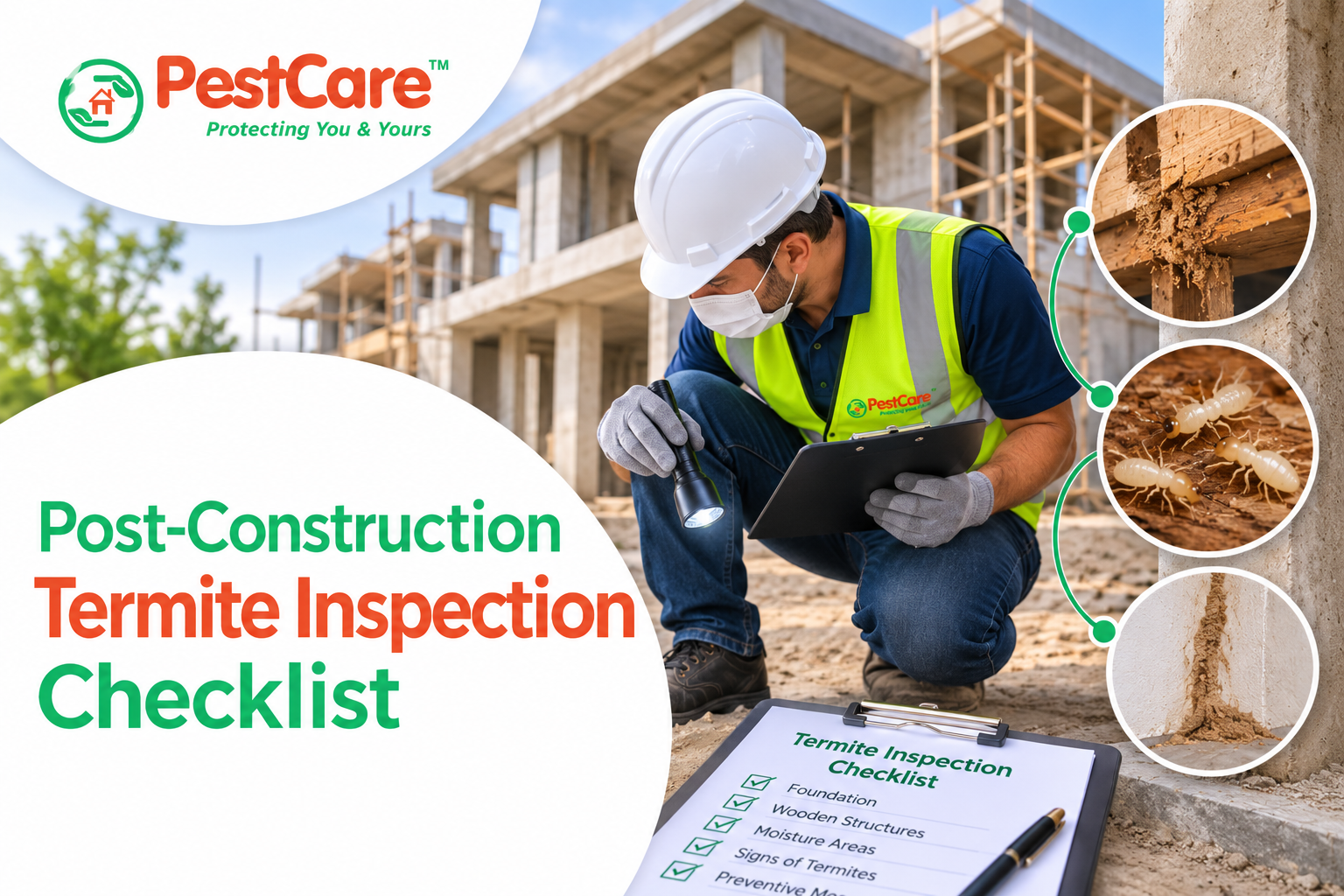
Building work can disturb an existing termite colony, leave soil exposed and open gaps around foundations and service pipes. If the preventive termite treatment was skipped, or done badly, the property can stay open to infestation.
A post-construction inspection helps you:
Find it early, and you're much less likely to face widespread damage and big repair bills.
Before you treat the property as ready to live in, go through these areas carefully.
Walk around the outside of the house first. Look closely at the walls and the base of the building. Subterranean termites move through the soil, and they build mud tubes to get across to the wood.
What to look for:
Spend a bit longer at the corners, and at any spot that stays wet after rain or after you’ve washed the area.
Once termites are inside, wooden fittings are usually the first things they go for.
Check these:
Knock lightly on any wood that looks suspicious. If it sounds hollow, or the paint is bubbling or the wood looks damaged, termites could be the cause. Other things can look the same, though.
Termites can sit under a floor or behind a skirting board for a long time without being seen. That’s why they’re so hard to catch early.
Look for:
If you find floor damage and can’t explain it, call in a professional to inspect it. Don’t put it down to a construction defect.
Termites like damp places, and kitchens and bathrooms have plenty of them.
Check these spots:
Fix the leaks and give the rooms better ventilation. That takes away the moisture termites need.
In dark, badly ventilated spaces, termite activity is easy to miss.
Inspect:
Clear away any wood, cardboard and construction waste you don't need.
Someone telling you the house was treated during construction doesn’t prove it. Ask to see the paperwork.
Written records show what protection the house really has, and whether you need to do anything more.
Finding mud tubes, damaged wood or discarded wings in a new home is worrying. Ignoring them lets the problem spread, though.
Before you move into a newly built property, a professional inspection is a good idea. It matters most if you can't find the pre-construction treatment records.
Think about one in these situations too:
A professional can pick up signs you might miss on a household inspection.
A new home should be protected from day one. A check you do yourself will turn up the visible warning signs. But termites can hide behind walls, under flooring and inside wooden structures.
Pest Care India offers professional pest management to help property owners find and deal with termite problems. If you need a Termite Control Service in Ahmedabad, book an inspection to find out what condition your property is in and what treatment options you have.
Don't wait for visible damage. Call Pest Care India on 98989 80205 to ask about termite inspection and control services for your property.
Yes. It shows up hidden termite activity, untreated areas and moisture problems before you move in.
Look at the foundations, wooden frames, flooring, kitchen cabinets and damp areas. You're looking for mud tubes, hollow wood, discarded wings and other signs of termites.
Book an inspection before anyone moves in. That matters most if you don't have the pre-construction treatment records, or you suspect termites. A professional can recommend the treatment that fits.
Yes. They can attack wooden fittings, furniture, flooring and other materials that contain cellulose, even in a brand-new property.
Pest Care India provides pest management services. Call 98989 80205 to ask about termite inspection and the control options available in Ahmedabad.